24
Abr
09

Acuarelas

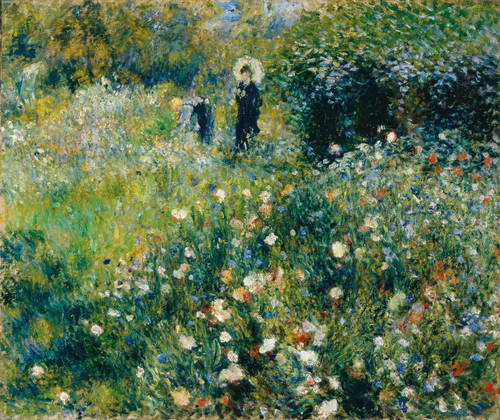
Con esta breve entrada espero explicar mi silencio. En la barra lateral de este blog, bajo el epígrafe Alter Blog encontraréis Estaciones de luz. Es un blog sin palabras pero con imágenes de algunas de las acuarelas que llevo pintando desde hace un par de años. Junto a mi casa, en Soto de la Marina, en un pub muy agradable donde suelo parar llamado Soul Jazz Café, hay actualmente una exposición de mis acuarelas y eso me ha dado mucho trabajo extra, aunque también una gran satisfacción -desde aquí, un afectuoso saludo para Gonzalo-. La idea es venderlas, pero la crisis … ya se sabe. El arte es accesorio.
Por cierto, pido disculpas por las fotografías, que no son muy buenas. Hasta que no encuentre a alguien que me explique el fotoshop ese…
Otro día ya hablaré de lo fascinante que es trabajar con acuarelas, lo traidoras y volubles que son, lo divertidas. Un poco como gatos.
Y es que ahora me ha dado por escribir pintando.

17
Ene
09

De verdad, vivir

Leí por primera vez a Clara Janés este pasado verano.
Fue en medio de un Encuentro sobre Mística Española que se celebraba en la Universidad Internacional Menéndez Pelayo. Me había apuntado por no sé qué extraña idea mía de que en un curso sobre este tema iba a hablarse de la poesía de Santa Teresa y San Juan de la Cruz, que siempre me han gustado, y no sobre lo que se habló: política, historia -y esto ni tan mal-, economía, y de postre un arrebatado alegato en contra de unas supuestas místicas contemporáneas cuyas piedras angulares son Juan Salvador Gaviota y la música de Enya. Curiosamente, ingenua de mí, nunca habían levantado mis sospechas. Nunca está uno suficientemente alerta.
El caso es que en medio de la concurrida asistencia, pues el curso tuvo una inusitada aceptación, compuesta de personas inquietantemente parecidas entre sí, todas muy bien arregladas, aureoladas, castificadas o castradas, gloriosas casi, y rodeada de otros ponentes de aire tan claustral como vampiros intelectuales, apareció ella, sonriente, tranquila, hermosa y perfectamente terrenal. Habló de Santa Teresa y dijo lo que yo había venido a buscar.
En la librería de La Magdalena compré un par de libros suyos. De “Los secretos del bosque” escojo este pequeño poema. Me parece que a los organizadores del curso se les ha debido pasar, pues dudo que una pasión semejante no turbe sus frágiles principios.

Mi galopada violenta
hacía trizas la oscuridad.
Parecía que mi paso talara los bosques
y que en una sola noche
llegaría a las orillas del mar.

01
Ene
09

Voces

En ocasiones oigo voces. O mejor dicho, una voz. Empieza como una extraña tensión interna, tan sólo una vaga inquietud. Luego es apenas un susurro ininteligible. Si escucho con mucha atención, se transforma y acaba teniendo significado. Surge desde el fondo de mí y se convierte en palabra, normalmente no más que un monosílabo. Sí. No. Hay que saber interpretarla.
Infaliblemente, dice la verdad.
Escuchar no es simplemente prestar oídos. Es mucho más. Es pararse, esperar, conceder, aceptar. Es no negarse a la empatía, ni a la reflexión ni al valor. Es correr por ahí saltando vallas muy altas, vallas que otros no se atreven a saltar. Salir del estruendoso laberinto del mundo y encontrarse en la inmensa y delicadamente sonora llanura de la vida.
Pues bien, ayer noche escuché la voz mientras preparaba la cena de fin de año.
En el horno estaba la pata de cordero con las patatas panadera; acabándose de cocer en la vitro estaban los langostinos; la encimera estaba cubierta de fiambres, puding, ensalada…, todo puesto a recuperar temperatura ambiente. También una masera o buey de mar. Era lo último que me quedaba por preparar. La había comprado al mediodía, en mi pescadería habitual. Yo leía en el libro de cocina instrucciones para centollos al vino blanco, pensando que sería parecido cocinar aquel bicho mayúsculo.
Entonces se movió. Hasta entonces no lo había hecho, o yo no me había percatado. Estaba todavía en la bolsa de plástico, sobre un gran plato. El ruído del plástico la delató. Abrí la bolsa con cautela y miré bien a la masera. Parecía una piedra. Entonces soplé suave sobre ella. Sus ojos giraron en sus órbitas, buscando protección, y su pinza derecha -futura suculenta boca de mar- se separó ligeramente de su cuerpo.
Me quedé mirándola, esperando a que volviera a moverse, pero no lo hizo. Llamé a Joel, mi hijo de 11 años, para que dejara su Lego y viera aquello. Cuando estuvo a mi lado, volví a soplar y la masera se movió de nuevo; poco, pero algo fue. Nos quedamos ahí los dos, mirándola.
Entonces sentí la cuerda tensarse en mi interior, la inquietud, el susurro. La voz. Dijo: “No.”
Acerqué mis labios al oído de mi hijo y susurré a mi vez: “¿Qué te parece si la soltamos?”
Por suerte vivimos a cinco minutos andando de una de las franjas costeras más hermosas de Cantabria: Costa Quebrada. Y para allá fuimos, armados de linternas.
No hacía nada de frío, pues estaba de sur. Bajamos por un caminito hacia la más densa negrura de la unión entre tierra y mar, ahí donde hay unas canales de roca y las olas acarician una y otra vez millones de cantos rodados. El mar se revolvía a lo lejos, invisible. Pusimos a la masera en una poza pequeña, para que fuera reaccionando. Luego, cuando empezó a hacer burbujas y a moverse un poco más, la pusimos al borde de una de las canales, completamente bajo el agua. Unos pequeños cangrejos se marcharon apresuradamente. De repente, la masera estiró sus patas y avanzó de lado, enorme y majestuosa, hacia lo profundo.
Estuvimos un rato contemplándola ahí donde se paró, ya definitivamente fuera de nuestro alcance. No sé qué pensaría Joel -quién sabe nunca lo que se cuece en la cabeza de otras personas-, pero yo comprendí de golpe lo que significa cazar y lo que significa dejar de cazar. Ambas cosas pueden tener sentido sin excluirse mutuamente. La cuestión es encontrar la medida justa.
También pensé otras cosas, como y si no hubiera otras maseras por la zona y esta estuviera condenada a una vida de estéril soledad. Y también logré ver la masera con ojos de gaviota y de un vecino experto pescador de percebes. Y también sentí miedo ante la inmensidad del mar, la fuerza de las corrientes, los muchos depredadores y la inexperiencia. Quizás fuera una masera de piscifactoría.
Pero todo eso ya no importaba. O ya no tenía remedio.
Joel y yo volvimos a casa charlando y riendo. Nos abrió Rafa, que no acababa de creerse lo que había sucedido. Joel decía que iba a contarle aquello a todos sus amigos. Al principio le dijo que no -Rafa me apoyaba, había que salvarse del ridículo- pero luego cambié de opinión y le dije que podía contárselo a quien quisiera. ¡Qué cojones! Hay que ser coherente.
Pues sí, en ocasiones oigo una voz y en ocasiones escucho a esa voz. Es la misma voz que me dijo que recogiera de la calle y salvara a los cuatro gatos -cuatro Nikis- que viven con nosotros y son una de las más gratas fuentes de nuestra felicidad. Es la misma voz que me dijo que me separara del padre de Joel el día que de veras le conocí.
No anda desencaminada, no, la voz.

20
Nov
08

El tentempié del estudiante entrado en años

Cuando sumas el Hamlet y el Macbeth de Shakespeare; la semántica y la lexicografía; a Ishiguro, a Byatt y a Zadie Smith; todo lo que va desde Roland Barthes, Foucault y Derrida hasta Frantz Fanon; toda la literatura poscolonial en lengua inglesa habida y por haber; canapés de La Celestina, el Lazarillo, Garcilaso, Góngora, Calderón, Moratín, Bécquer, Unamuno, Lorca y Blas de Otero; la historia del Reino Unido y de EE.UU.; un pan de Alemán arriba y otro abajo; y todo ello aderezado con una indigerible salsa gramatical, el tentempié resultante se llama CIPRALEX.

Dígale usted ADIÓS a la ANSIEDAD, y luego váyase tranquilo a cumplir con su jornada laboral.

20
Nov
08

Bichos espectaculares

_mg_8348_web2Nunca me han gustado los bichos. Sin embargo, me atrae la belleza.

¿Que cómo se come?

Pues pinchando aquí. Y para muestra, un botón, el de arriba.

16
Nov
08

Celama, el mar y el regresarse

Durante mucho tiempo me limité a darle vueltas de vez en cuando en la cabeza: Celama. Siendo como era tan sólo una palabra, tenía, sin embargo, el peso del universo que es. Pero yo no mas lo rondaba, mientras en mi imaginación lo sentía presente y más tangible que muchos territorios que sé que existen por los mapas, los noticiarios o los libros de historia.

Ofrecí a Celama por mucho tiempo resistencia, como a esa corriente invisible, poderosa, impasible, que nos puede llevar sin remedio mar adentro. Y es que tiraba y tiraba de mí, aunque yo no supiera -y creo que eso a él le gustaría- quién era su creador. Supongo que esto me pasó porque cuando miro el mar no me suelo acordar de ningún dios. Luego me he dejado llevar.

Parece ser que llevo bastante tiempo -en realidad, muchísimo tiempo- mirando al mar. Incluso algún amigo hay que me ha puesto bajo la categoría de R.I.P. -no, no me ofendo, pues qué razón ha tenido. Lo cierto es que me ha hecho mucha gracia que, después de muerta, pueda una seguir pintando algo. Desde aquí un saludo, Panta-, mientras que otros amigos me piden que me regrese, curiosa expresión reflexiva y muy afortunada.

Pues bien, he cambiado la carátula y me regreso. Alguna cosa más habría que cambiar por ahí aunque una siga siendo la misma, pues eso es inevitable. Magritte sigue presidiendo la mesa y, pese a que no ha estado nada mal, cierro definitivamente la marea de comentarios sobre gatos. Con los cuatro que ahora mismo tengo ya voy sobrada.

Y a Celama… cuidado con ir, que a veces no se vuelve. 

Celama, según Alejandro Emilio Fernández

Celama, según Alejandro Emilio Fernández

16
Nov
08

HOLDING THE KEY: T.S.ELIOT´S “THE WASTELAND”

 Section V: What the thunder said.

Lines 411-414

“Dayadhvam: I have heard the key

Turn in the door once and turn once only

We think of the key, each in his prison

Thinking of the key, each confirms a prison.”


            Regardless of Eliot’s theory of the objective correlative -according to which it would be enough for me to infer the presence here of some oriental wisdom lecturing on solitude and selfishness- I will start this paper giving the sources to these verses. After all, no man is like another, or knows what knows another, and a much vaster tradition permeated Eliot than it does me, and probably many others.

            These sources are three-fold: mythical, literary, and philosophical.

In the first place, we find a reference to the Hindu fables called Upanishads. Gods, men, and demons, having concluded their study of sacred knowledge, ask their father Prajapati to speak to them. He, embodied as the Thunder, only says “Da”, which each interprets in its own way. “Dayadhvam” is what the demons interpret, a word to be translated as “sympathize”, or “be compassionate”. Together with what the others interpret, namely “give” and “control” or “be restrained”, they represent the three main virtues necessary in life.

Next, we find a reference to Dante’s Inferno, Canto XXXIII, verse 46, which could be translated as “And below I heard the door of the horrible tower being locked up”. Count Ugolino, accused of treachery, is locked up in a tower, and starved to death together with his two children and grandsons.

Finally, Eliot himself, in his notes on the text, said these verses paraphrase some of the ideas of the philosopher F.H.Bradley, whose “Appearance and Reality” he worked on for his doctorate. These ideas grossly amount to the fact that the theoretical distinction between appearance and reality no longer functions, as they are inseparable. A degree of reality is to be found in all appearances, being reality an all-inclusive unity. The reality of the individual ego is, according to both Bradley and Eliot, limited to its particular and subjective point of view, and they search for a greater truth. Bradley finds it in the Absolute, a concept not shared by Eliot.  For Eliot this greater truth is Tradition, the living and integrating whole, a labyrinth of bridges that connect the individual conscience with all other consciences having lived before in all times and places.   

In the context of the whole poem these three references are highly significant as they enlighten us on the true nature of the wasteland man is found inhabiting by the end of the Great War. Not only has the physical world –people, cities…- crumbled down, but the spiritual one –society, civilization- as well. Man stands among the ruins, and he stands alone, though he be crowds walking as if forlorn. Eliot presents the modern mind and the destruction of the values that maintained it alive. Spiritual death, loss of meaning, chaos, fear, decay, denial, emptiness, sterility, is what we have. Not even love can be taken in any more, the desire to be left alone –even more alone- pervades, as we see in the fragment of the typist and her lover in The Fire Sermon (lines 222-256). The progressive rise of the individual, that has been taking place along the 19th century, has not led to man’s integration but to his disintegration in his solitude. In the end, we find man trapped in the tower of his self, condemned to starve in spite of having become a cannibal –Dante represented Ugolino gnawing at a human skull-, while the Thunder pronounces one of the key words to his liberation: be compassionate.

 This commandment could be understood as a clue to the possible relief eventual rain could bring. After all, it is the Thunder who speaks, and we are in our self-made desert yearning for rain. However, we must not forget that though appearance and reality are linked, they are not the same thing: the Thunder said “Da”, not “Dayadhvam”, it is the demons who understood it that way. Accordingly, what the Thunder really said remains unknown. Anyway, this counsel, though it were true, comes too late. Ugolino is paying his due for his treason, he has not sympathized.  As J. Bottum points out, “What the thunder said is that God has departed from both the poet and the city, and that death and decline alone remain… a doomed defence alone remains: ”These fragments I have shored against my ruins”.”

On the other hand, in these verses we also find elements that represent what was to be Eliot’s spiritual “grand tour”. According to David Naugle, “Before arriving at his Anglo-catholic destination, he had travelled by way of Indian thought and the philosophy of the English metaphysician F.H.Bradley”.  These are the three stages of Eliot’s intellectual and religious development, and the three of them are reflected in this fragment, with the single aim of reconstructing the world. Dante and the Upanishads were both made explicit by Eliot himself in the notes to the poem, notes whose mere existence also deserves a commentary. For as Viorica Patea says: “Las notas son selectivas en el reconocimiento de alusiones y referencias literarias: revelan algunas fuentes, pero ocultan otras. El problema fundamental no consiste en aceptarlas o rechazarlas, sino en saber cómo interpretar su doble juego de menciones y silencios.”

In my opinion, the allusion to Christianism is clear in the mention of a “key”. For though it is not referred to in the sources, the occidental mind will sooner than anything else think of Saint Peter, the holder of the keys that open –or close- the door to the Christian Heaven. Eliot needed not mention this fact explicitly, as the reader would recognize it immediately. This is what Eliot called “symbolism incidental”, as well as an example of the objective correlative working at its best.

Locked in ourselves –for Bradley conceives man as incapable of communicating his own experience, trapped in the limitation of his personal point of view-, thinking of the key –a key that locks, confirming a prison, a consequence that must be undone, unmade, so as to make the key open- surrounded by ruins, destruction and sterility, Eliot seeks for salvation. He has shored all the fragments, heard all the voices, put together in this poem all he has turned to so far -myth, philosophy, religion-, and must, with this baggage, come to some conclusion.

According to many critics, this conclusion implies the acceptance of the commandments of the Thunder, the dictates of a remote religion based on humble contemplation leading to ultimate truth: “Shantih  Shantih  Shantih “ . Viorica Patea says: “El poema de Eliot traza el viaje del alma a través del desierto de la ignorancia, del sufrimiento y de la sed de aspiraciones terrenales. Concluye con la revelación de una realidad que libera su condición fragmentada. En el misterio de la contemplación el ser intuye la plenitud de este estado de conciencia no dual y no objetivable.” Silvia Levirato says: “The myth and the use of fragments represent the cipher-key for the comprehension of The Waste Land: they have no power to unify and revivify culture; but as part of the great traditions of our common history, they have the power to help us turn our wasteland into a garden.” A.N.Dwivedi says: “…the prevailing sterility in The waste land…can hardly be turned into an oasis unless the virtues exhorted by Prajapati are earnestly practised by mankind.” David Naugle says: “Eliot’s concern in The Waste Land was universal and he expresses his concern for a world peace as the remedy to the inferno of modern life in Hindu terms to convey his global outlook.”

But J.Bottum observes: “The last words of the poem are not the last line’s ‘Shantih Shantih Shantih’ but the last note’s dry explanation that” ‘The Peace which passeth understanding’ is our equivalent to this word.” Eliot reduces even “Shantih” to an ironic fragment.”

In fact, Eliot has told us that rain has indeed come. This extraordinary event takes place in lines 394-395 and, though being such a transcendental matter, he has mentioned it quite superficially, as if it were something of no importance whatsoever. Rain happens midway through section V of the poem, randomly, and the Thunder myth follows, as well as the Grail myth and the Fisher King myth. Nevertheless, to me, after the strange relief of this random rain, the myths seem empty. Nature brought relief, but not to man, to the Earth, a “thing” man is quite alienated from. Thirst continues as we inhabit an inner wasteland that can find no relief. Thus, the outcome of the poem is not positive. Eliot remains a sceptic. The key we hold will never open anything. Humankind is lost. Whatever rebirth we might invent will ever be a partial one.

In 1927, five years after publishing The Waste Land, we find Eliot has embraced Anglo-catholicism, the High Church, which is the most traditional and conservative branch of the Church of England. For him, this, his most famous and ineffable poem, has become “a thing of the past”. He has walked back on his steps, retraced the path that only leads to despair, a despair deeply envisaged by him. Who knows if he, such as so many, needed to believe there is some key, somewhere, that can be held in one’s hand and open something.


03
Feb
08

La luz de la verdad

Hoy en día nadie duda de que William Turner (1775-1851) sea uno de los pintores más extraordinarios de todos los tiempos, tanto por su estilo innovador y único como por su magistral técnica. Disfrutó, además, de un gran reconocimiento en vida, pese a lo cual -o quizás debido a lo cual- en su última época tendía a ser retraído y procuró envolverse de secretismo, hurtarse a la mirada de los demás.
Siempre he pensado que la búsqueda de la pureza, de la esencia en libertad, de la verdad que reside en el recuerdo, da como resultado una luz peculiar, la que él fue capaz de plasmar en sus cuadros, sobre todo en aquellos que consideraba inacabados, aunque acaso no lo estuvieran en realidad, sólo para el ojo de los otros, al cual había que hacer concesiones previas a la exposíción de las obras.
He aquí ese misterio que no se logra explicar pero en el que no se puede sino creer.
n01981_9.jpg
Norham Castle: Dawn, 1835-1840

norham-castle-detail.jpg

30
Ene
08

Probando, probando…

El sábado pasado recogí mi flamante Specialized Stumpjumper Comp 2008 y el domingo a mediodía salí a probarla. Hubiera querido llevarla a Ucieda pero había que hacer demasiados ajustes como para irse demasiado lejos así que Rafa -mi querido mecánico- y yo decidimos dar una vuelta hasta el faro de Santander y volver, en total y costeando unos 30km y pico.
Mientras le esperaba estuve ajustando la posición del sillín y aflojando un poco los pedales -por cierto, no tengo los Crankbrother que vienen con la bici sino que hice poner unos Shimano mixtos A530- e intentando acostrumbrarme al cambio Sram, distinto del Shimano que tenía en la BH, y cuando él llego y a poco que empezamos a andar fuimos comentando el ajuste de la horquilla y el amortiguador trasero.
Sin duda es esta una bici tan buena como dicen todos los comparativos y foros que he consultado. Y no es sólo que, para sus características, es una bici muy ligera, no llegando a 12.5kgr equipada al completo, sino que su geometría es comodísima, tanto para subir como para bajar. Ya me imagino haciendo alguna de las rutas que llamamos épicas, de las que no bajan de 80km de montaña, sin que se me cargue ni la espalda ni las muñecas ni nada. Por otra parte ambas amortiguaciones responden maravillosamente y se pueden afinar en el rebote con una precisión que no había imaginado. Y el Propedal es increíble, no he notado que contaminara nada la pedalada, si acaso mínimamente con el plato pequeño, y, sin embargo, dibuja con exactitud el terreno, de modo que no se pierde nada de tracción.
Otro de los puntos fuertes de la bici son sus frenos Avid Juice 5, disco de 180 en la rueda delantera y 160 en la trasera.
El conjunto de todos sus componentes, y eso que ha sido apenas eso, una prueba, funciona de forma impecable. He sentido que esta bici era como de otro mundo, concebida para adaptarse a cualquier terreno en cualquier circunstancia. Tanto en los tramos de carretera, en que la llevé completamente bloqueada, como si fuera una rígida, como en las bajadas y subidas bruscas y escalonadas típicas de la costa, puros saltos de roca viva, tramos que antes había abordado con inseguridad o bajándome de la bici directamente, no tuve ningún problema. La bici iba suave como el terciopelo.
¡AHORA SÍ QUE PIENSO TIRARME POR SITIOS ALUCINANTES, QUE ES LO MÁS DIVERTIDO!

27
Ene
08

Ilustrando

asilencelike.jpg Jackie Morris, posiblemente la ilustradora más fascinante del panorama actual.

La interpretación es un arte cruel. Es el arte de la invisibilidad. Quien interpreta a otros se tiende cada noche a dormir con una fiera indomable a la que se entrega, esperando que le sea benigna.


DIARIO DE VIAJE POR MUNDOS UTÓPICOS
"...that blessed mood, in which the burthen of the mystery, in which the heavy and the weary weight of all this unintelligible world, is lighted... ...while with an eye made quiet by the power of harmony, and the deep power of joy, we see into the life of things." Wordsworth's Tintern Abbey, 1798

Utopía…

Licencia

Creative Commons License
Esta obra está bajo una licencia de Creative Commons. Internet Blog Serial Number 2-5-4919-2138

Estadísticas del blog

  • 48,473 Visitas